
Smart Campus
A HEPHAESTUS project combining automation and digital applications to explore smart university environments.
- Project year
- 2025
- Scale model
- Building Z
- Design protocol
- MQTT
- Focus
- Automation
The project
Smart Campus brings together electronics, sensors and software to study smart-building and automation applications in a university setting.
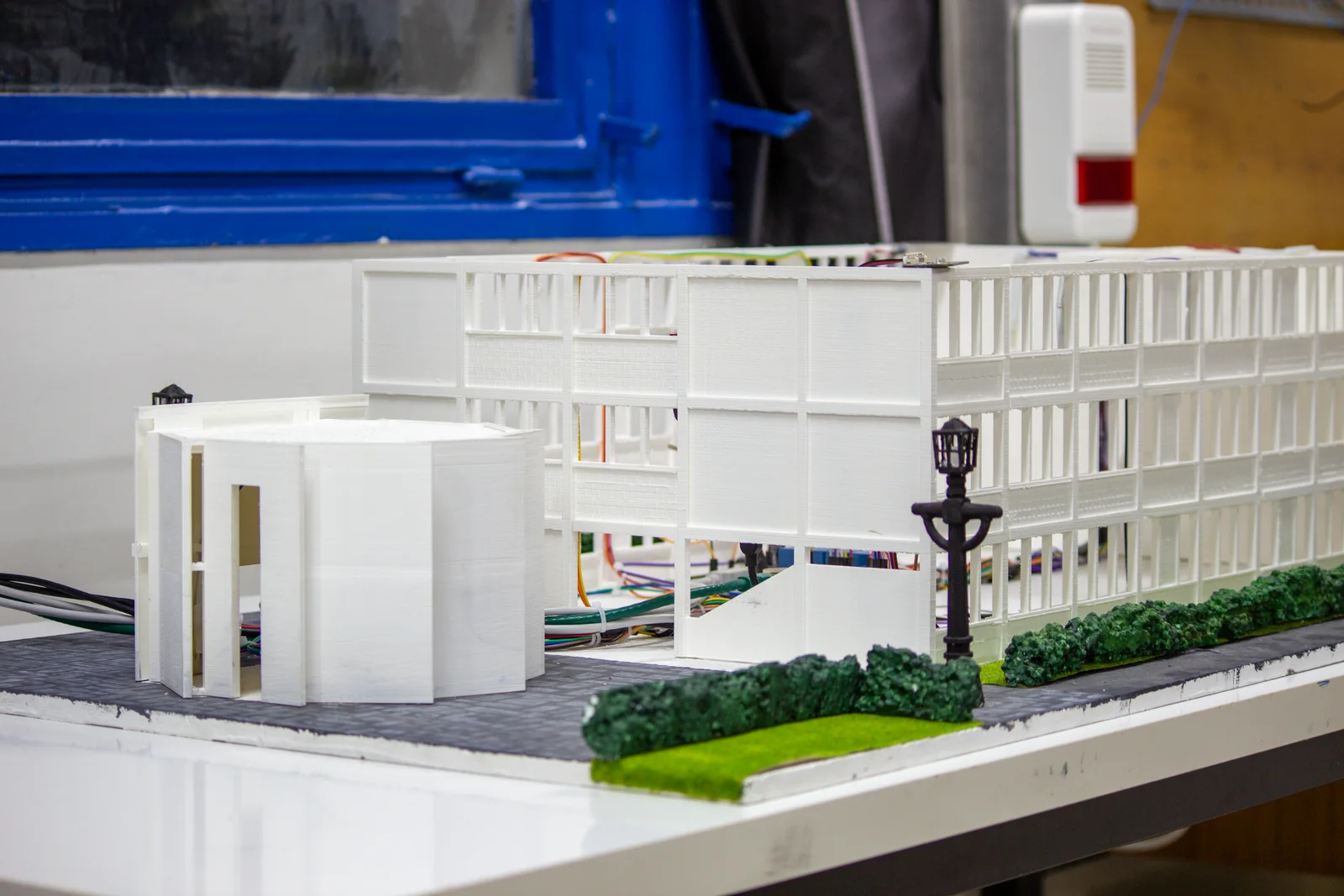
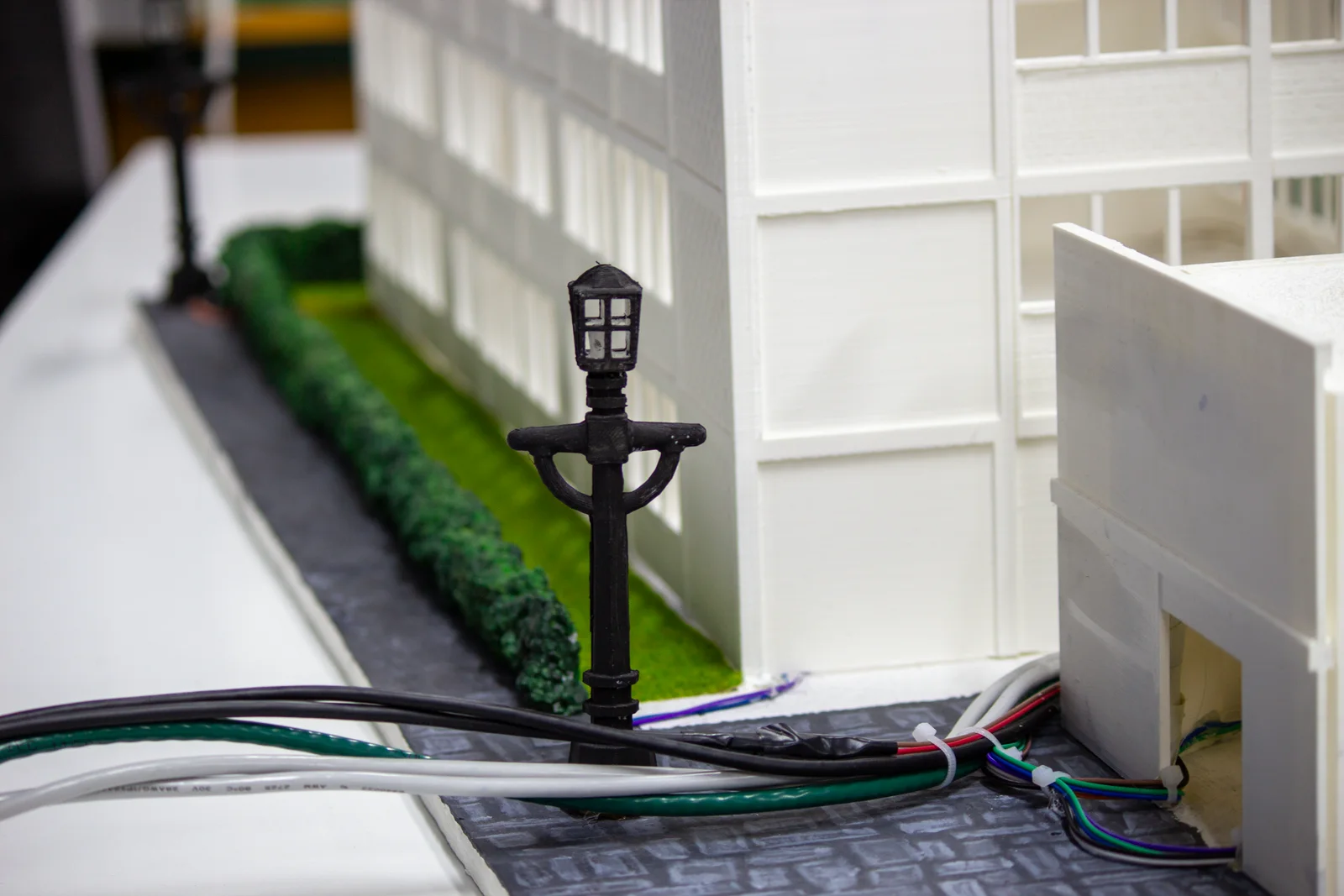
A central element of the project is a scale model of Building Z at the Koukouli campus in Patras, designed to scale and manufactured using 3D printing. The model is used to explore scenarios for monitoring conditions and automatically controlling lighting or safety alerts. The architecture includes networked modules, environmental sensors and data-presentation applications. Smart Campus is part of HEPHAESTUS's wider work in automation and computing. It is not part of the rocket systems, but shares many important technical skills with them.
Every part. One system.
Scale model and 3D manufacturing
To test initial solutions in a controlled environment, a scale model was created based on Building Z and the team's workspace. The design was based on measurements, and the model was manufactured using 3D printing. It demonstrates how sensors and control mechanisms connect to each part of the building. It also serves as an educational tool for studying connected systems.
Sensors and environmental monitoring
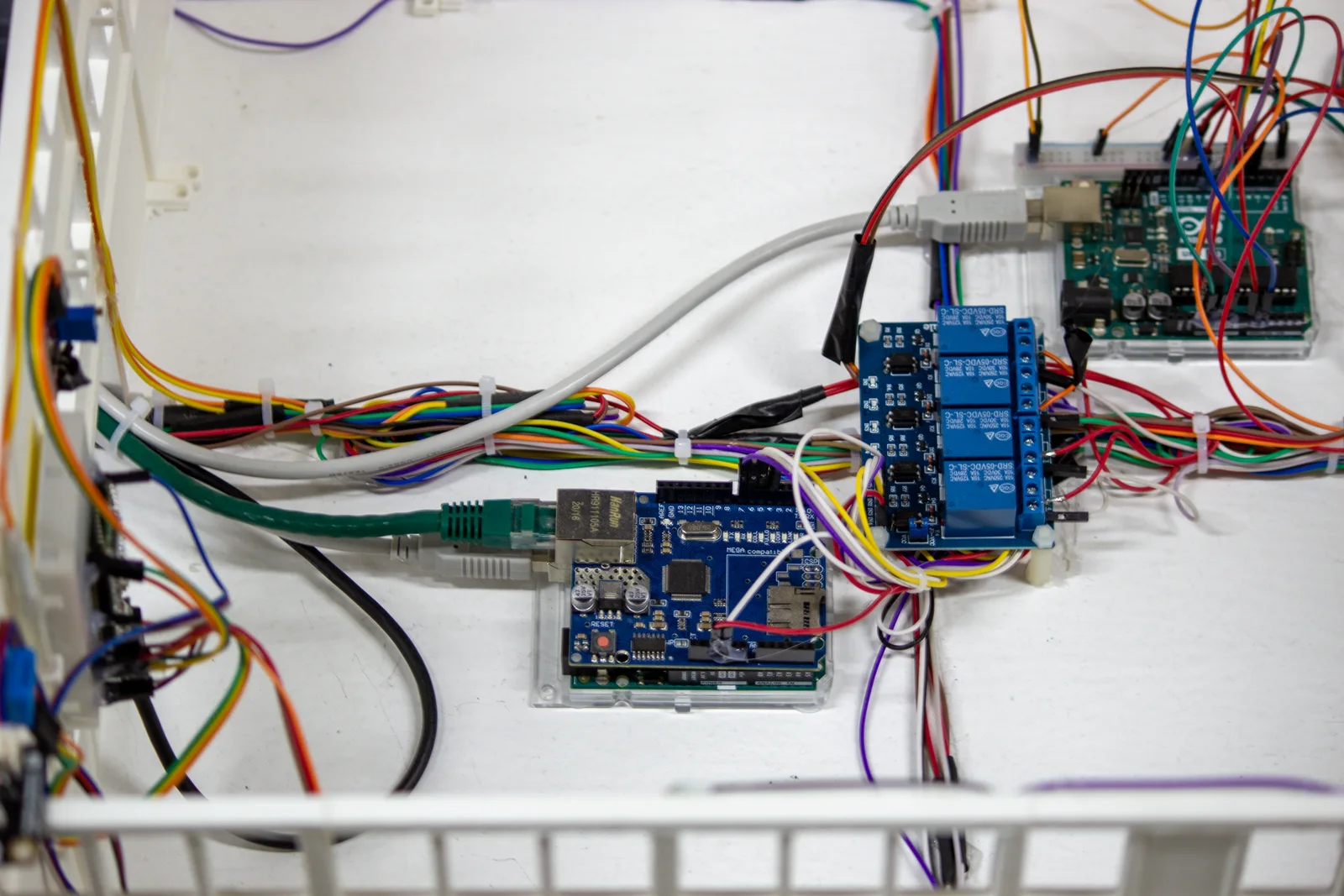
Smart Campus examines measurements of temperature, humidity, light levels and indicators related to a space's operation and safety. The design also includes rain, flame and hazardous-gas sensors. The value of the data lies in their ability to support specific control and notification actions. Proper sensor integration requires reliable communication and processing logic.
Automation scenarios
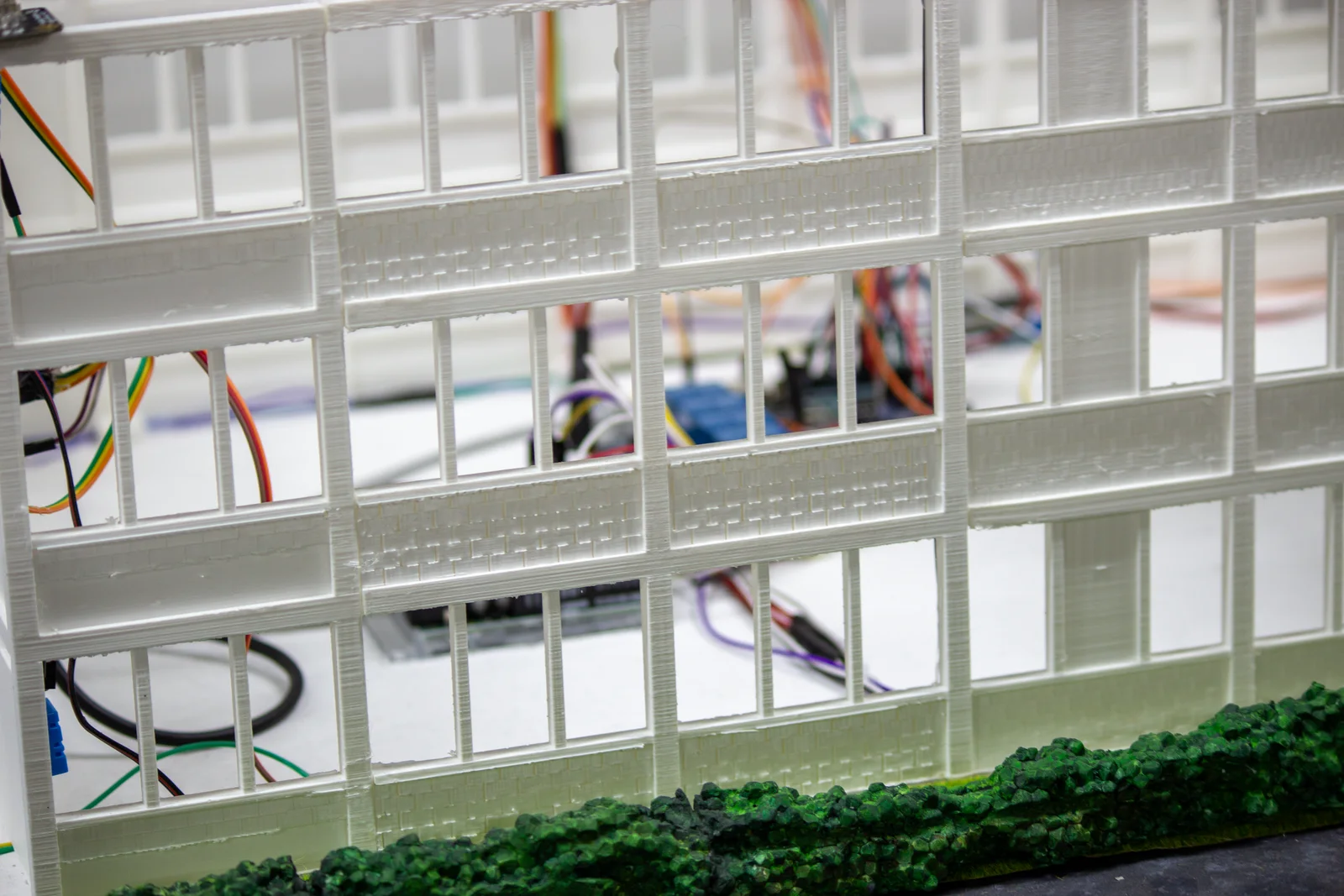
Sensors gain practical value when connected to automated actions. The project studies scenarios for adapting lighting to environmental conditions, triggering alerts and managing other functions of a space.
Networks and communication
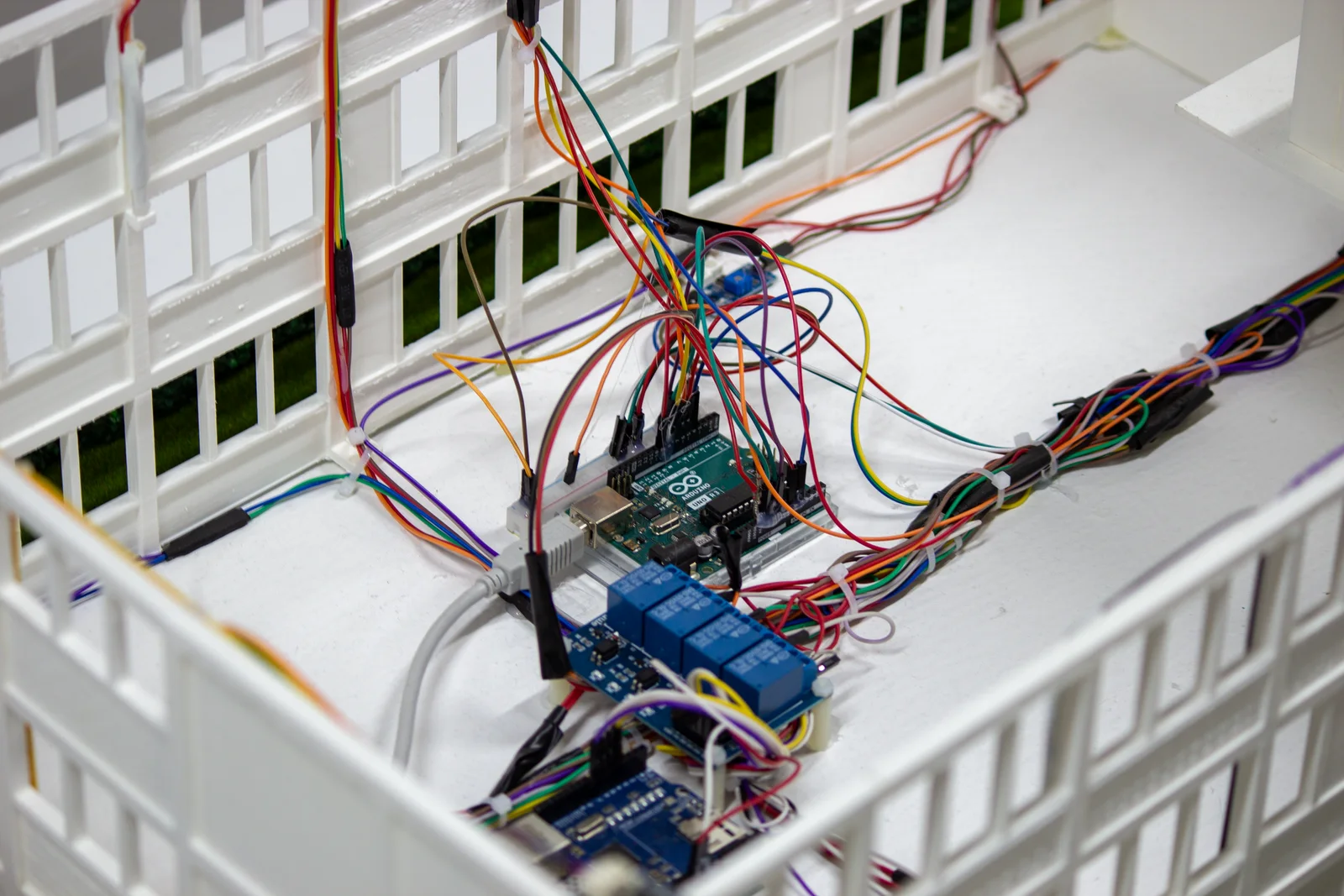
The Smart Campus architecture uses modules that exchange data and commands. The project documentation identifies MQTT as the communication protocol, with the aim of organising the system into independent, expandable functional modules.
Applications and digital visualisation
Visualising measurements and operating states is part of the Smart Campus design. Proposed capabilities include web interfaces, dashboards and digital representations of spaces for educational use. The team is exploring ways to make data easier to handle and understand. Applications that are still at the design stage are not presented as services already installed at the University.