Mission SARISSA
Our competition rocket for the Czech Rocket Challenge 2026. According to the team, it placed 4th in the Advanced University category. The mission provided real flight data, testing experience and specific technical lessons for our next step.
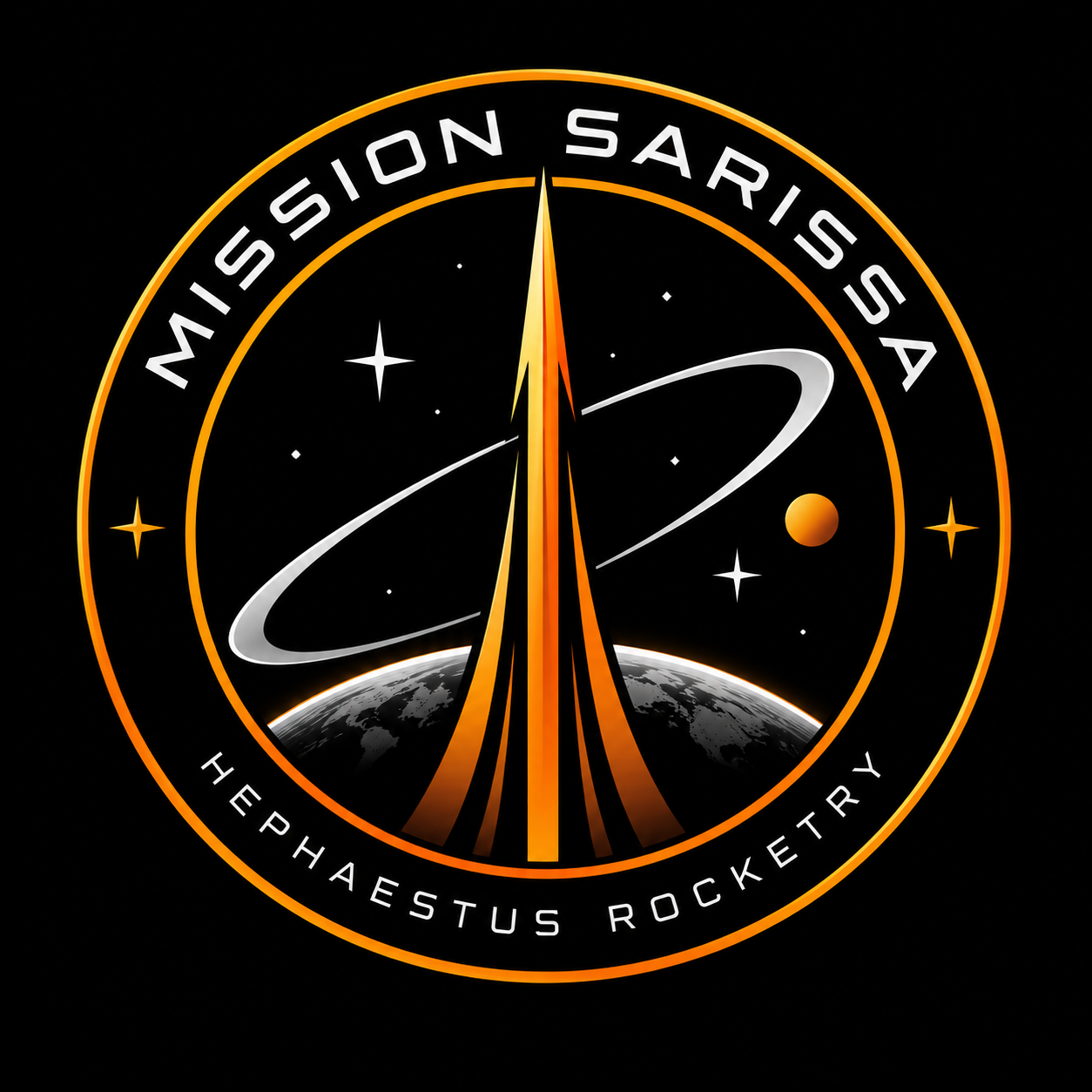
- Apogee
- 497 m
- Outer diameter
- 60 mm
- Flight computer
- RP2040
- Telemetry
- LoRa
The project
SARISSA was the rocket with which HEPHAESTUS took part in the Czech Rocket Challenge 2026. The mission brought together mechanical design, manufacturing, flight electronics and a scientific experiment in an integrated competition system.
The name SARISSA refers to the historic Macedonian sarissa and the importance of coordination: every individual system must work together with the others. Our design sought to balance aerodynamic behaviour, strength and the ability to manufacture components with the laboratory resources available. According to the team, we placed 4th in the Advanced University category and the mission reached an apogee of 497 metres. The recovery system did not operate as intended. Nevertheless, the flight data were retained and analysed, providing useful lessons for the development of the next rocket.
SARISSA,
inside and out.
Explore the actual SARISSA CAD models. Show or hide individual components to inspect their geometry.
The model loads when its viewer comes into view.
Drag to rotate · keyboard arrows · + / − to zoom
Every part. One system.
Structure and aerodynamics
The rocket was developed with a modular approach, allowing subsystems to evolve independently and making assembly easier. The nose cone design was based on Von Kármán geometry, which was examined in aerodynamic simulations.
Materials and manufacturing
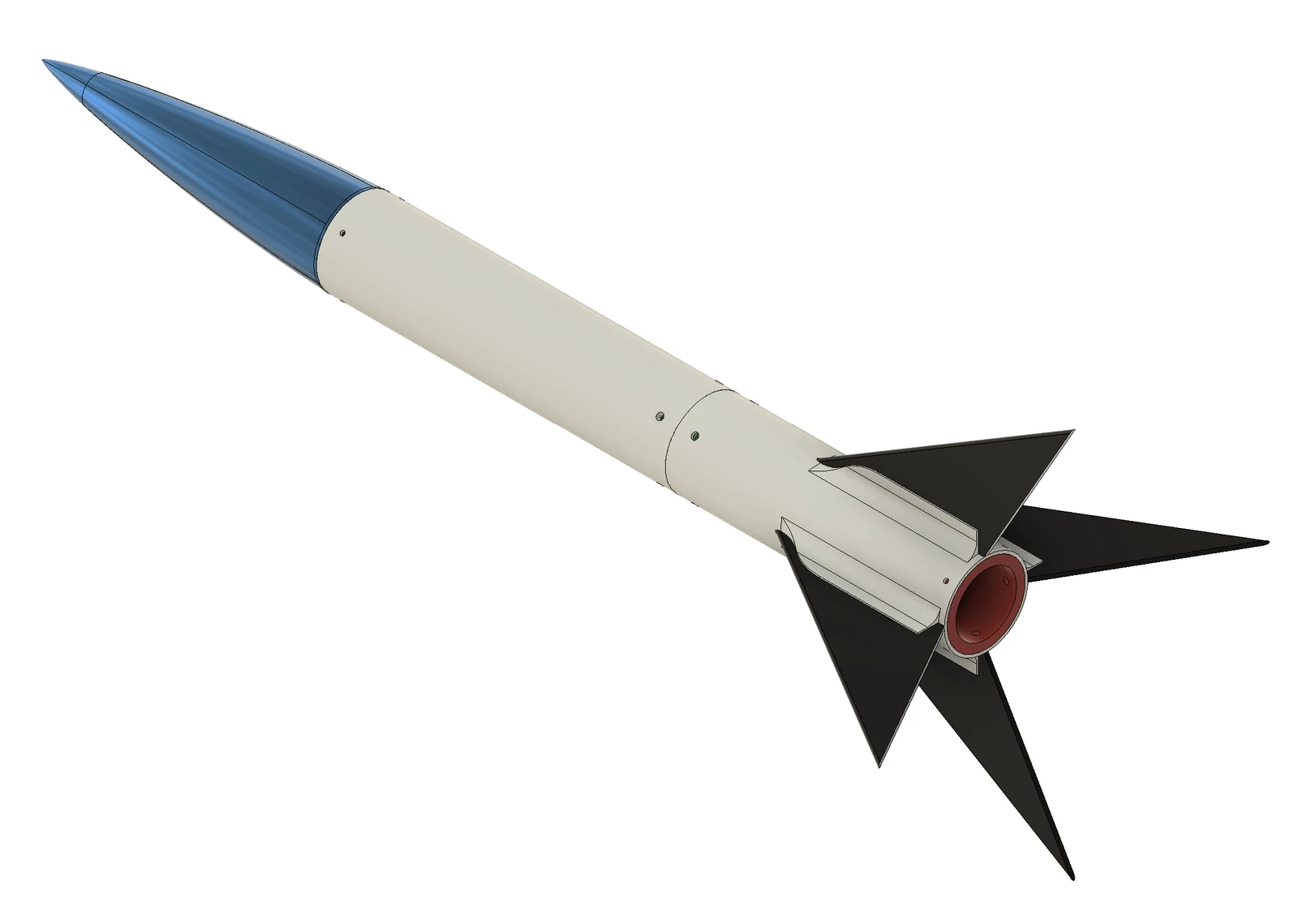
A significant proportion of the mechanical components were 3D-printed using ABS and Hyper-PLA. Fibreglass fabric and epoxy resin were used to reinforce the fin area. Material selection required a balance between mass, strength and the ability to manufacture a replacement component.
Avionics and telemetry
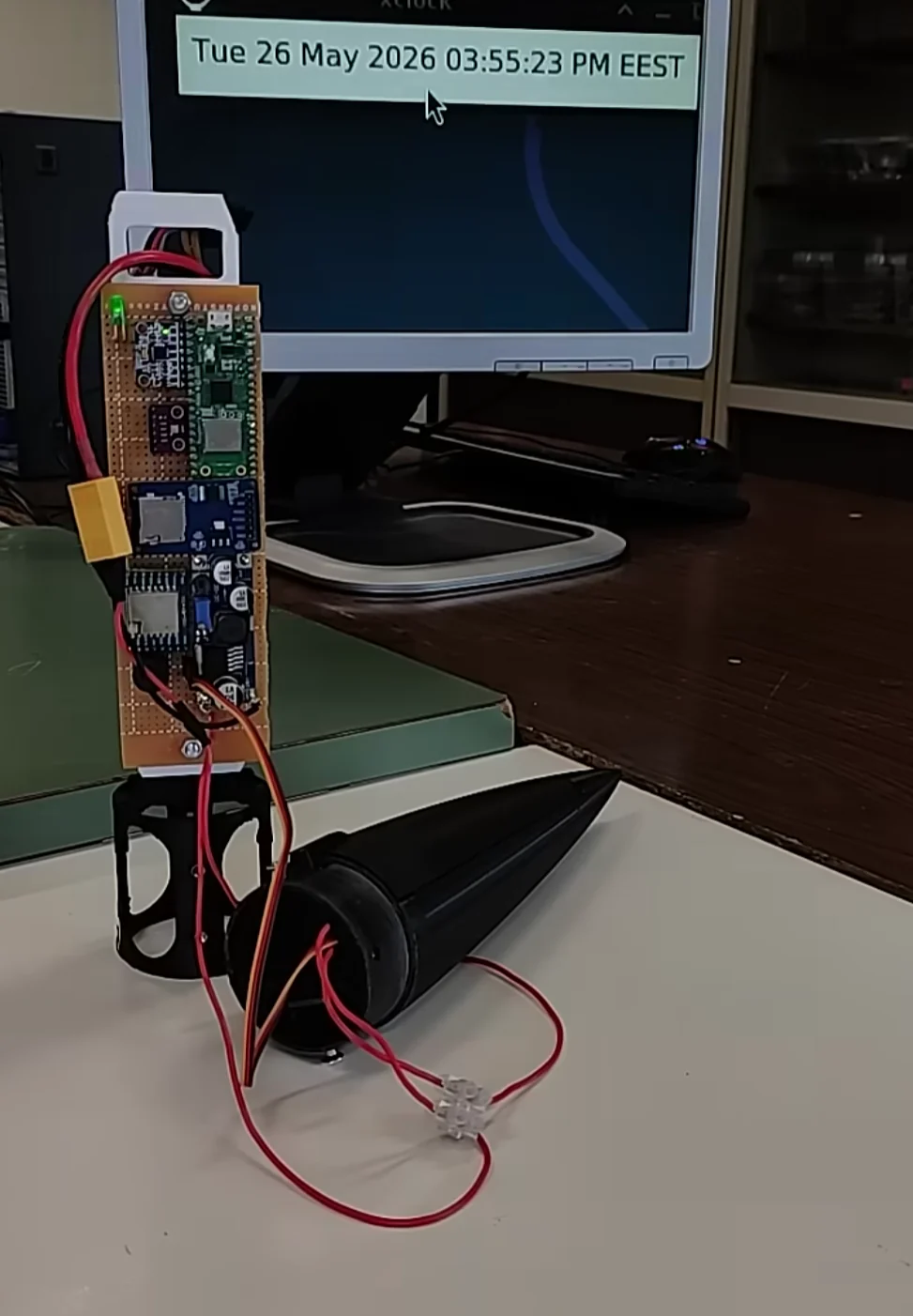
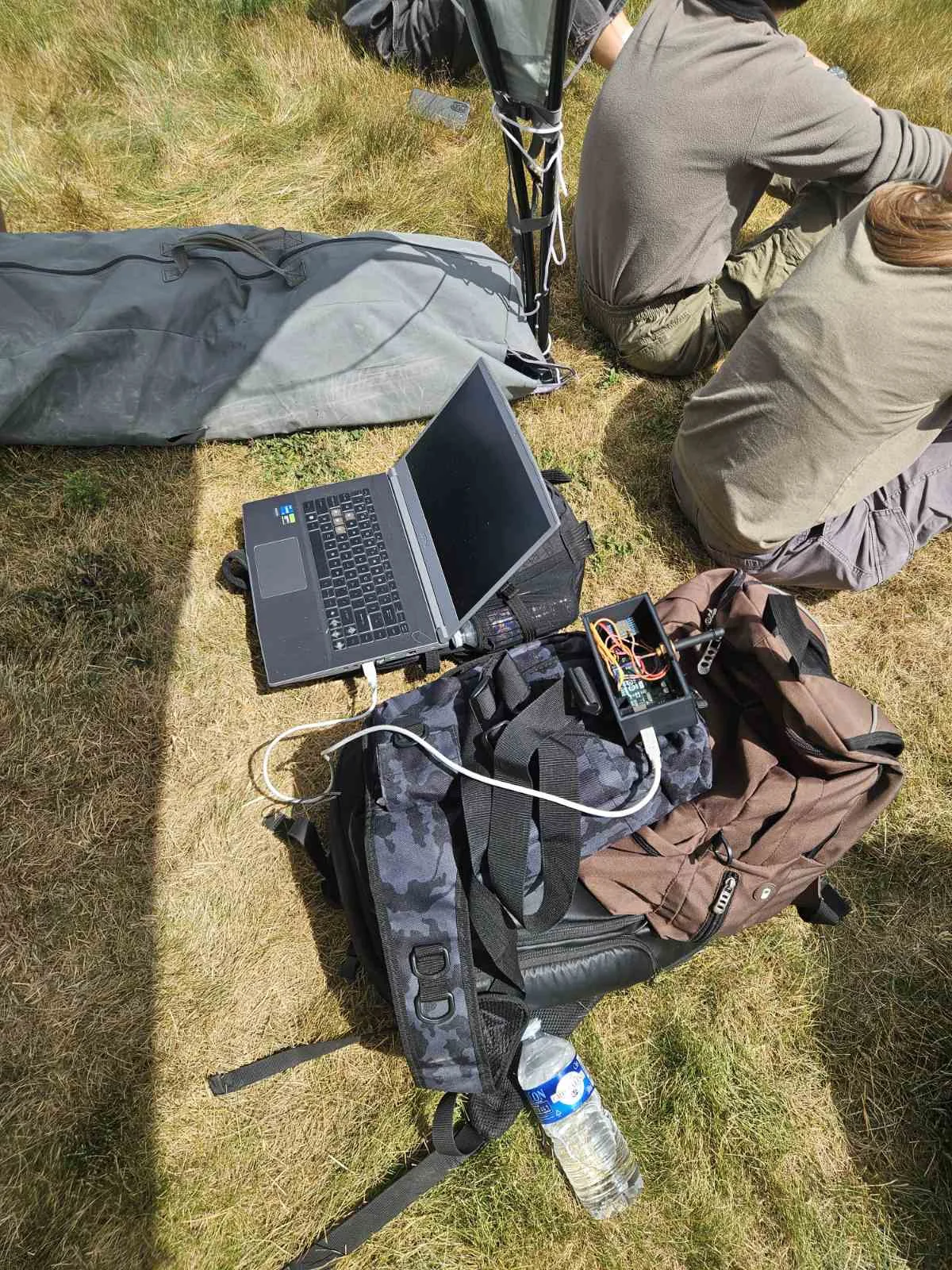
The team developed the flight electronics using an RP2040 microcontroller, motion and barometric pressure sensors, and software written in MicroPython. LoRa wireless communication and a ground station were used to monitor the mission. Combining sensing, recording and flight control enabled the flight to be evaluated afterwards. The avionics work brought together electronic design, programming and the management of real data.
Scientific experiment
SARISSA incorporated an experimental setup to investigate microgravity during flight. The system used a spring, a magnet and a Hall sensor to record changes in the magnetic field associated with the system's mechanical movement.
Recovery system and flight analysis
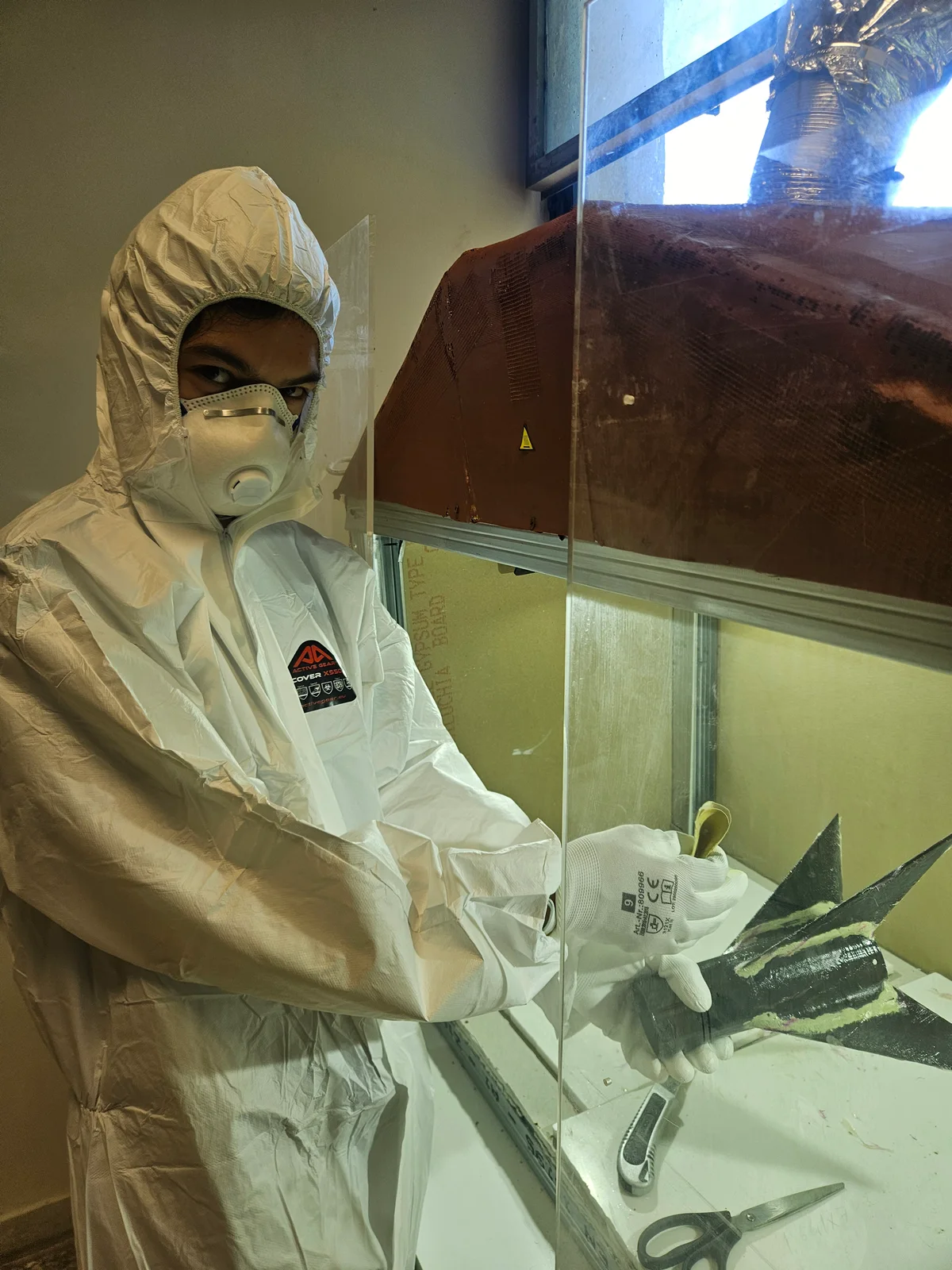
The intended recovery system included a parachute and a servo-actuated deployment mechanism. Recovery did not take place as intended during the competition flight. Analysis of the available data and the technical review focused on identifying the flight phases, the reliability of the mechanism and the need for further testing.